
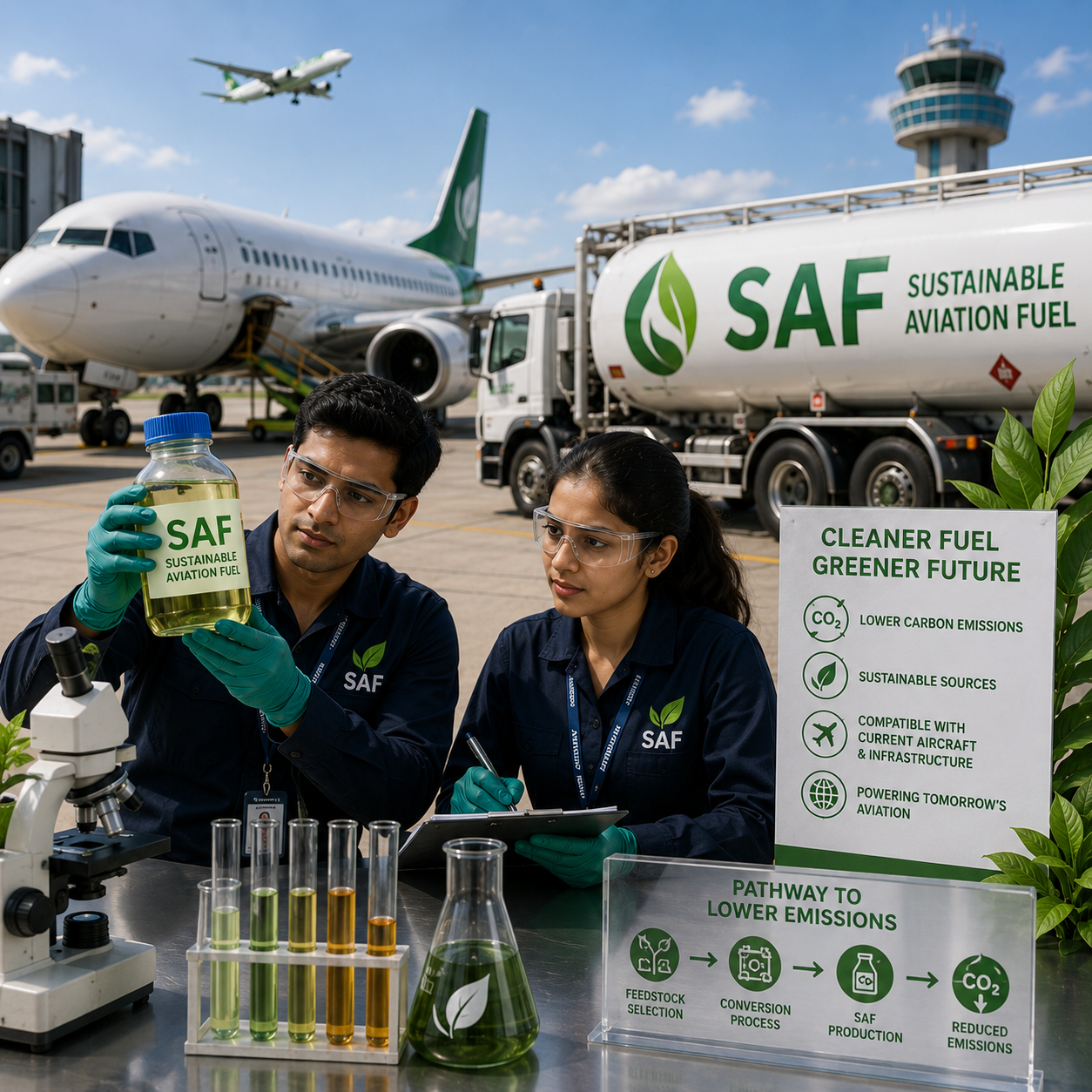
Aviation Biofuels: Paving the Way for Sustainable Air Travel
Sustainable aviation fuel (SAF) emerges as a transformative alternative to conventional jet fuels, derived from renewable, non-petroleum feedstocks. Crafted to curtail emissions from air travel, SAF can be intermingled with traditional jet fuel in blends ranging from 10% to 50%, contingent upon the feedstock source and production methodology.
Did you know that sustainable aviation fuels (SAF) are not just a future concept but a reality being practiced? To date, 43 airlines have embraced SAF, collectively committing to using around 16.25 billion liters (13 million tonnes) by 2030. This ambitious move has already powered over 360,000 flights globally, marking a significant step towards greener skies.
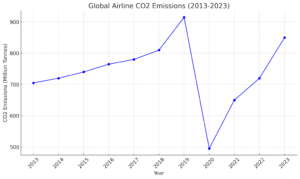
It’s an exciting era for aviation as it aims to reduce its carbon footprint. What’s your take on this transformation? Do you think this will steer the future of aviation in the right direction?
Aviation relies on several types of fuel, each suited to different types of aircraft and engines. Here’s an overview of the primary types of fuel used in aviation:
1. Jet Fuel (Kerosene-based)
- Jet A and Jet A-1: These are the most common types of kerosene-based fuels used in commercial and military jet engines. Jet A is primarily used in the United States, while Jet A-1 is the standard fuel used internationally. They have a high energy content and are designed to perform reliably at the extreme temperatures found at high altitudes.
- JP-8: A military jet fuel similar to Jet A-1, with additives to improve its performance and reliability in military operations. It is commonly used by NATO forces.
2. Aviation Gasoline (Avgas)
- Avgas 100LL: Avgas, or aviation gasoline, is used primarily in small piston-engine aircraft. Avgas 100LL (low lead) is the most common type, formulated to improve engine performance and reduce the risk of detonation (knocking) in high-compression engines. Unlike jet fuel, Avgas is more similar to automobile gasoline, but with a higher octane rating and additives specific to aviation needs.
3. Sustainable Aviation Fuel (SAF)
SAF is produced from renewable sources such as agricultural waste, municipal solid waste, and forestry residues. This means that SAF has the potential to reduce greenhouse gas emissions by up to 80% compared to conventional jet fuel”.
- Biofuels: SAFs are derived from renewable sources like plant oils, algae, agricultural waste, and other bio-based materials. They are designed to have a similar chemical composition to conventional jet fuel, allowing them to be used in existing engines without modification. SAFs reduce the lifecycle carbon emissions associated with aviation.
- Fischer-Tropsch Synthetic Paraffinic Kerosene (FT-SPK): A synthetic fuel made from biomass or waste gases through the Fischer-Tropsch process. FT-SPK is compatible with conventional jet engines and offers lower emissions.
- Alcohol-to-Jet (ATJ): Derived from alcohols like ethanol or butanol, ATJ fuel can be converted into a jet-compatible fuel. It’s still in the development phase but has the potential to be a sustainable alternative.
Sustainable Aviation Fuel (SAF) are made of:
4. Synthetic Fuels
- Power-to-Liquid (PtL) Fuels: Produced by converting captured CO₂ and hydrogen (from renewable sources) into liquid fuels. These synthetic fuels are emerging as a promising option for achieving net-zero emissions, though they are currently limited by high production costs and technological challenges.
5. Hydrogen
- Liquid Hydrogen: Considered the ultimate zero-emission aviation fuel, hydrogen can be used in fuel cells or combusted in modified jet engines. Liquid hydrogen has a high energy content and produces only water as a byproduct. However, it requires special storage and handling due to its cryogenic nature, and it’s still in the research and development phase for large-scale aviation.
Each type of fuel has unique properties that make it suitable for different types of aircraft, and the aviation industry is actively exploring sustainable alternatives to reduce its environmental impact.
The aviation industry, a major contributor to global emissions, is under increasing pressure to adopt sustainable practices. One promising solution is aviation biofuels, an alternative to conventional jet fuel made from renewable sources. By reducing carbon emissions, aviation biofuels play a critical role in achieving the aviation sector’s ambitious sustainability goals. In this article, we’ll explore what aviation biofuels are, how they’re produced, their environmental benefits, challenges, and the future of this transformative technology.
What are Aviation Biofuels?
Aviation biofuels, also known as sustainable aviation fuels (SAF), are fuels derived from biological sources, including plants, algae, and waste materials. Unlike traditional fossil-based jet fuels, which are extracted from non-renewable resources, biofuels can be produced from a variety of renewable feedstocks, minimizing their impact on the environment. By utilizing organic materials as a primary source, aviation biofuels significantly lower the carbon footprint of air travel.
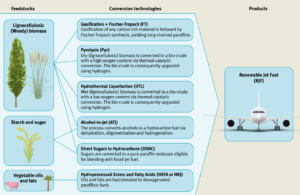
Types of Feedstocks for Aviation Biofuels
Aviation biofuels can be produced from several types of feedstocks, each with unique properties and environmental impacts:
- Plant-based Oils: Sources like soybean, camelina, and jatropha are rich in oils that can be processed into biofuel. These crops are renewable, and some even grow on non-arable land, making them less competitive with food resources.
- Algae: Algae is a promising biofuel feedstock due to its high oil yield and rapid growth rate. Algal biofuels offer significant potential but are still costly and challenging to produce at scale.
- Waste Materials: Biofuels can be produced from waste products such as agricultural residues, municipal waste, and forestry by-products. This approach not only reduces waste but also provides an additional revenue stream for industries that generate large amounts of organic waste.
How Are Aviation Biofuels Produced?
The production of aviation biofuels involves multiple steps, each carefully designed to convert biological materials into a fuel that can meet the high-performance requirements of jet engines. Below are the main processes used to produce SAF:
1. Hydroprocessed Esters and Fatty Acids (HEFA)
HEFA is the most widely used process for converting plant oils and fats into jet fuel. The process involves:
- Hydrotreating: Plant oils and animal fats are processed using hydrogen to remove oxygen and other impurities.
- Catalytic Cracking: The treated oils are broken down into smaller hydrocarbon molecules, creating a fuel that mimics the properties of conventional jet fuel.
HEFA is currently the only commercially viable technology for producing biojet fuel on a large scale and is compatible with existing aviation infrastructure.
2. Fischer-Tropsch Synthesis (FT)
The Fischer-Tropsch process converts biomass, such as wood or agricultural residues, into a synthetic gas (syngas), which is then transformed into a liquid fuel. While FT fuels offer excellent energy density and stability, this method is more complex and requires advanced infrastructure.
3. Alcohol-to-Jet (ATJ)
The Alcohol-to-Jet process uses alcohols (such as ethanol and butanol) derived from sugar, starch, or cellulosic biomass. The alcohols undergo dehydration and oligomerization to form hydrocarbons suitable for jet engines. Although not yet widely adopted, ATJ is being researched as a potential alternative for sustainable aviation fuel production.
Environmental Benefits of Aviation Biofuels
One of the primary motivations behind developing aviation biofuels is their potential to significantly reduce the aviation industry’s environmental impact. Here are some of the major environmental benefits:
Reduced Carbon Emissions
The lifecycle of aviation biofuels, from production to combustion, results in fewer greenhouse gas emissions compared to conventional jet fuel. Biofuels are derived from renewable feedstocks that absorb CO₂ as they grow, helping offset the emissions released during fuel combustion. Studies suggest that biofuels can reduce carbon emissions by up to 80% on a lifecycle basis.
Decreased Dependence on Fossil Fuels
By providing an alternative to fossil-based jet fuel, biofuels decrease the aviation sector’s reliance on oil, contributing to energy security and reducing exposure to oil price volatility. This shift supports a broader transition to renewable energy in the transportation sector.
Improved Air Quality
In addition to lowering carbon emissions, biofuels can reduce the emission of pollutants such as sulfur oxides (SOx) and particulate matter (PM). This results in cleaner air around airports, benefiting local communities and reducing the aviation sector’s overall environmental footprint.
Challenges Facing Aviation Biofuels
While aviation biofuels offer significant environmental benefits, their widespread adoption faces several challenges:
High Production Costs
Producing aviation biofuels remains more expensive than conventional jet fuel due to high feedstock costs, complex production processes, and limited infrastructure. Although prices are expected to decrease as technology advances, cost remains a significant barrier.
Limited Feedstock Availability
The availability of sustainable feedstocks is limited by agricultural land, water resources, and competition with food production. Developing alternative sources, such as algae and waste materials, could help overcome this challenge, but further research and investment are needed.
Regulatory and Certification Hurdles
To ensure safety and performance, aviation biofuels must meet stringent regulatory standards. Certification processes are lengthy and costly, often requiring substantial testing to demonstrate that biofuels are compatible with existing engines and infrastructure.
The Future of Aviation Biofuels

Despite these challenges, the future of aviation biofuels looks promising, with substantial investments and innovations paving the way for more sustainable air travel.
India progress in Aviation Biofuels

- In 2018, SpiceJet conducted India’s first biofuel-powered test flight from Dehradun to Delhi. The fuel blend, consisting of 25% biofuel derived from the jatropha plant and 75% aviation turbine fuel, marked a significant milestone for the country. This successful test flight demonstrated the feasibility of using biofuels in commercial aviation, creating momentum for further advancements.
- On February 18, 2022, IndiGo marked a significant milestone by receiving its first SAF aircraft from Airbus. This event also saw the launch of the first international flight operated by an Indian carrier using Sustainable Aviation Fuel (SAF), showcasing IndiGo’s commitment to sustainable aviation practices.
- On May 19, 2023, AirAsia India’s flight i5-767 made history by becoming thefirst commercial passenger flight in Indiato use a blend ofsustainable aviation fuel (SAF)andaviation turbine fuel (ATF). The flight, which departed from Pune and arrived in New Delhi, was powered by SAF produced indigenously by Praj Industries using agricultural feedstock, in collaboration with Indian Oil Corporation Ltd (IOCL).
- Union Minister of Petroleum and Natural Gas, Hardeep Singh Puri, received the flight in New Delhi, marking a significant step towards sustainable aviation in India. This initiative aligns with the country’s Aatmanirbhar Bharat Abhiyan mission and demonstrates a commitment to reducing the environmental impact of aviation
- Companies like Praj Industries are making significant strides in the biofuel sector by:
- Actively developing bio-refineries and advanced biofuel production technologies.
- Providing innovative technology for sustainable biofuel production.
- Focusing on diverse feedstocks such as:
- Agricultural waste
- Lignocellulosic biomass
These feedstocks can be efficiently converted into jet fuel, contributing to a more sustainable aviation industry.
- Indian research institutions, in collaboration with oil companies like Indian Oil Corporation (IOCL), Bharat Petroleum Corporation Limited (BPCL), and Hindustan Petroleum Corporation Limited (HPCL), are working on developing efficient and cost-effective biofuel technologies, which can enable large-scale production and distribution.
Government Initiatives and Incentives
Governments worldwide are recognizing the importance of sustainable aviation and offering incentives to encourage the adoption of biofuels. Programs like Renewable Fuel Standard in the United States and the European Union’s RED II Directive aim to accelerate the production and usage of aviation biofuels.
Technological Advancements
Technological advancements in biofuel production, such as genetic engineering of algae and improved biomass conversion techniques, are making biofuels more cost-effective and accessible. These innovations have the potential to overcome some of the current limitations in feedstock availability and production costs.
Growing Industry Partnerships
Major airlines, fuel producers, and technology companies are forming partnerships to scale up aviation biofuel production and improve supply chain efficiency. Collaborations like these are essential for driving down costs, expanding infrastructure, and ensuring the long-term viability of sustainable aviation fuels.
Conclusion: A Sustainable Path Forward
As the world seeks to combat climate change, aviation biofuels offer a viable pathway to sustainable air travel. By reducing carbon emissions, decreasing reliance on fossil fuels, and improving air quality, biofuels can transform the aviation industry for the better. Although challenges remain, the combined efforts of governments, industries, and researchers are driving progress toward a greener, more sustainable future for aviation.
With continued innovation and investment, aviation biofuels could soon become a mainstream solution, enabling passengers to fly with a reduced environmental footprint. As we advance, the adoption of aviation biofuels will play a crucial role in creating a cleaner and more sustainable world, ensuring that future generations can enjoy the benefits of air travel without compromising the planet’s health.
Citation: – https://theaviation.in/2024/11/aviation-biofuel-sustainable-aviation-fuels-somendra-pandey-airplane-beast/